Black Silicon Carbide Applications: Where Is Black SiC Used?
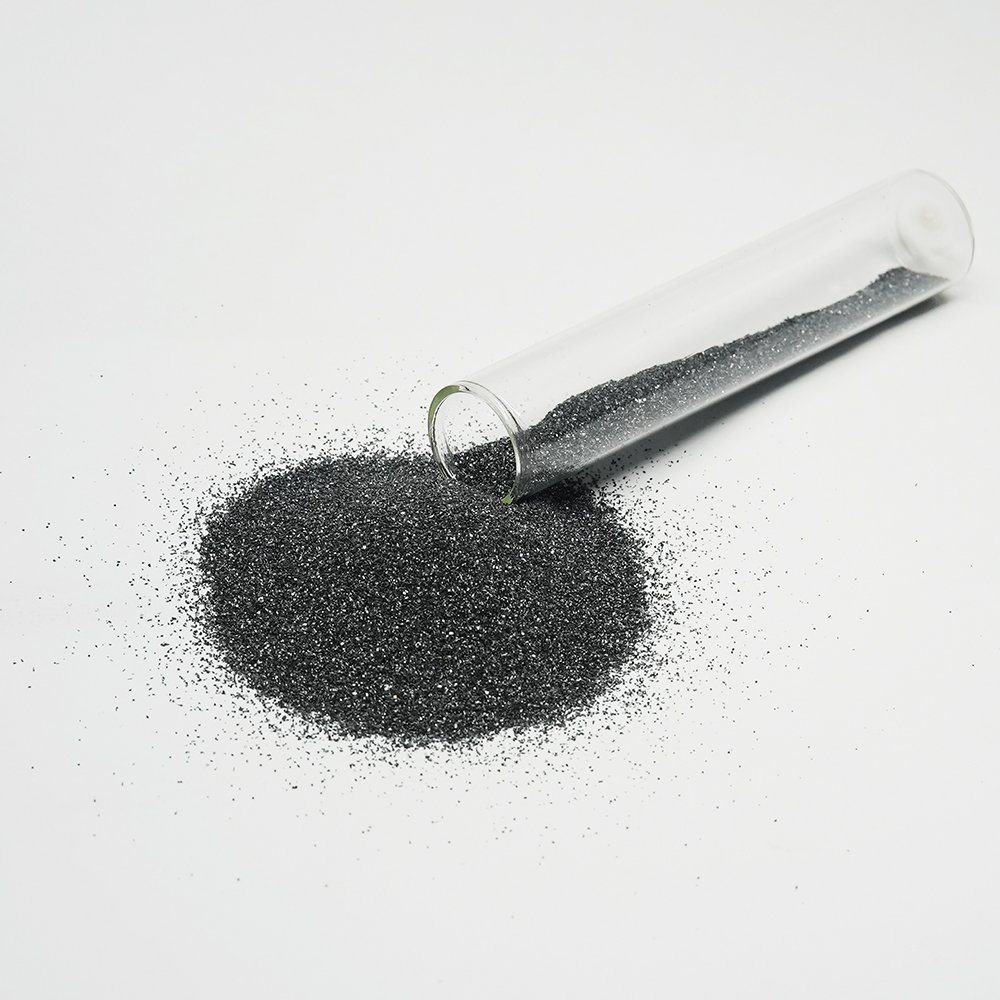
Black silicon carbide (Black SiC) is a hard, sharp and wear-resistant abrasive material widely used in surface preparation, grinding, cutting and other industrial applications. Its high hardness, excellent thermal properties and controlled particle sizes make it suitable for both abrasive products and specialized industrial processes.
Unlike green silicon carbide, which is often selected for applications requiring higher purity and specific cutting performance, black silicon carbide is commonly used where strong abrasive performance, durability and cost efficiency are important.
In this article, we will look at the major applications of black silicon carbide and explain how different industries select the appropriate SiC grit or powder.
What Is Black Silicon Carbide?
Black silicon carbide is a synthetic abrasive produced from silica and carbon at high temperatures in an electric resistance furnace. After production, the material is crushed, processed and classified into different particle sizes.
Black SiC is known for several important properties:
- High hardness
- Sharp abrasive particles
- Excellent wear resistance
- Good thermal conductivity
- High temperature resistance
- Chemical stability
- Consistent particle-size distribution
Its typical hardness is around Mohs 9–9.5, making it one of the harder industrial abrasive materials.
Black silicon carbide is available in different grit sizes, from relatively coarse particles for aggressive material removal to fine powders for precision finishing and specialized applications.
1. Abrasive Blasting
One of the most common applications of black silicon carbide is abrasive blasting.
Black SiC particles have sharp cutting edges that allow them to remove unwanted material from surfaces effectively. Compared with some softer blasting media, silicon carbide can provide faster cutting action and is suitable for applications where a harder abrasive is required.
Typical blasting applications include:
- Surface cleaning
- Paint and coating removal
- Rust removal
- Surface preparation
- Deburring
- Removal of oxidation
- Preparation before coating
Because silicon carbide is hard and angular, it can be particularly useful when a strong cutting action is required.
For blasting applications, customers typically select the grit size according to the required surface profile and material-removal rate.
2. Grinding and Abrasive Wheels
Black silicon carbide is widely used in the production of grinding wheels and bonded abrasives.
Its sharp grains can fracture during grinding and expose new cutting edges. This self-sharpening behavior helps maintain abrasive performance during certain grinding operations.
Black SiC can be used in:
- Grinding wheels
- Abrasive blocks
- Mounted points
- Abrasive stones
- Resin-bonded abrasives
- Vitrified abrasives
The choice of grit depends on the application.
Coarser grains are generally used for faster stock removal, while finer grains are selected when a smoother surface finish is required.
3. Cutting and Grinding of Stone
Black silicon carbide is also used for processing stone, marble, granite and other mineral-based materials.
Its high hardness and sharp particles allow it to cut and grind hard materials efficiently.
Applications include:
- Stone cutting
- Marble grinding
- Granite processing
- Surface grinding
- Stone polishing
- Edge finishing
In these applications, the abrasive grain needs to maintain sufficient hardness while providing effective cutting action.
Black SiC can therefore be incorporated into abrasive tools designed for stone-processing operations.
4. Ceramic Processing
Ceramic materials can be difficult to process because of their hardness and brittleness. Silicon carbide abrasives are therefore commonly used during ceramic grinding and finishing.
Black SiC can be used for:
- Ceramic surface grinding
- Edge grinding
- Deburring
- Dimensional finishing
- Surface preparation
The appropriate particle size depends on the ceramic material and the required finish.
Coarse SiC can be used for material removal, while fine SiC powder can be selected for more precise finishing operations.
5. Glass Grinding and Surface Finishing
Glass processing is another important application for silicon carbide abrasives.
Black SiC can be used for grinding and finishing different types of glass products, including:
- Flat glass
- Optical glass
- Glass components
- Glass edges
- Decorative glass
The sharp abrasive grains help remove material efficiently while allowing manufacturers to control the final surface finish through grit selection.
For precision glass processing, finer silicon carbide powders are generally preferred.
6. Refractory Materials
Silicon carbide is also used in the refractory industry because of its excellent resistance to high temperatures and harsh industrial environments.
Black SiC can be incorporated into refractory formulations and products used in high-temperature applications.
Potential applications include:
- Refractory bricks
- Furnace linings
- Kiln furniture
- High-temperature components
- Wear-resistant refractory products
Its combination of hardness, thermal conductivity and high-temperature stability makes silicon carbide useful in demanding industrial environments.
7. Non-Skid and Wear-Resistant Surfaces
Because black silicon carbide is extremely hard, it can also be used to improve the wear resistance and slip resistance of certain surfaces.
Applications may include:
- Industrial floors
- Anti-slip coatings
- Wear-resistant coatings
- Stair surfaces
- Ramps
- Industrial walkways
The abrasive particles provide a textured surface that can increase traction.
For these applications, particle size and distribution are important because they influence both surface texture and overall performance.
8. Wire Sawing and Precision Cutting
Fine silicon carbide abrasive powders can be used in specialized cutting processes, including applications involving wire sawing and precision material processing.
Fine SiC particles provide controlled abrasive action and can be used when manufacturers need to process hard materials with relatively high dimensional accuracy.
Applications can include processing of:
- Semiconductor-related materials
- Hard ceramics
- Glass
- Stone
- Other brittle materials
The required SiC powder specification depends heavily on the cutting equipment and processing conditions.
9. Abrasive Paper and Sanding Products
Black silicon carbide is also commonly used to manufacture coated abrasives, such as abrasive paper and sanding discs.
It can be bonded to a backing material to produce abrasive products for:
- Hand sanding
- Machine sanding
- Surface preparation
- Paint removal
- Finishing
- Deburring
Because SiC grains are sharp, they can provide efficient cutting action during sanding.
Fine-grit black silicon carbide abrasives are particularly useful when a smooth and uniform surface finish is required.
How to Choose the Right Black Silicon Carbide Grit?
Choosing the correct grit size is important because particle size directly affects cutting performance and surface finish.
A general guideline is:
| Application | Typical Grit Selection |
|---|---|
| Heavy material removal | Coarse grit |
| Abrasive blasting | Medium to coarse grit |
| Stone grinding | Medium to coarse grit |
| Ceramic grinding | Medium to fine grit |
| Glass finishing | Fine grit |
| Precision finishing | Fine SiC powder |
| Coated abrasives | Various grit sizes |
However, grit selection should not be based on particle size alone.
Other factors may include:
- Material hardness
- Required material-removal rate
- Desired surface roughness
- Abrasive bonding system
- Equipment type
- Processing speed
- Final product requirements
For industrial applications, customers should select the SiC specification according to the actual processing conditions.
Black Silicon Carbide vs. Green Silicon Carbide
Black and green silicon carbide have similar basic properties, but they are often selected for different applications.
| Property | Black SiC | Green SiC |
|---|---|---|
| Hardness | Very high | Very high |
| Abrasive performance | Excellent | Excellent |
| Typical purity | High | Generally higher |
| Particle characteristics | Sharp and durable | Sharp and friable |
| Common use | General industrial abrasives | Precision and specialized applications |
| Cost | Generally more economical | Generally higher |
Black silicon carbide is often a practical choice for general-purpose abrasive and surface-treatment applications, particularly when manufacturers need a combination of cutting performance and cost efficiency.
Why Particle Size Matters in Black SiC Applications
The same black silicon carbide material can perform very differently depending on its particle size.
Coarse particles provide stronger cutting and material-removal action, making them suitable for blasting, grinding and aggressive surface preparation.
Medium particles offer a balance between material removal and surface finish.
Fine powders are more suitable for precision grinding, polishing and applications where a smoother surface is required.
For this reason, industrial SiC suppliers normally provide multiple grit specifications rather than a single universal grade.
Applications Across Different Industries
Black silicon carbide can be found across a wide range of industrial sectors.
Metalworking
Used for grinding, deburring, surface preparation and abrasive blasting.
Stone Processing
Used for cutting, grinding, shaping and finishing stone materials.
Glass Industry
Used for glass grinding, edge processing and surface finishing.
Ceramic Industry
Used for grinding, finishing and dimensional processing of ceramic components.
Refractory Industry
Used as a raw material or additive in high-temperature refractory products.
Surface Treatment
Used in blasting media, sanding products and wear-resistant surface systems.
This broad application range is one reason black silicon carbide remains an important industrial abrasive material.
Conclusion
Black silicon carbide is a versatile abrasive material used across blasting, grinding, cutting, surface preparation, stone processing, glass processing, ceramics, refractories and coated abrasives.
Its combination of high hardness, sharp abrasive grains, wear resistance and thermal stability makes it suitable for demanding industrial applications.
The right black SiC specification ultimately depends on the material being processed, equipment, abrasive method and desired surface finish. Selecting the correct grit size, purity and particle distribution can significantly influence abrasive efficiency and final processing results.
For manufacturers looking for reliable black silicon carbide for industrial applications, choosing a supplier with consistent particle-size classification and stable production quality is essential.
Looking for black silicon carbide for your application? Contact us to discuss the appropriate grit size and specification for your process.