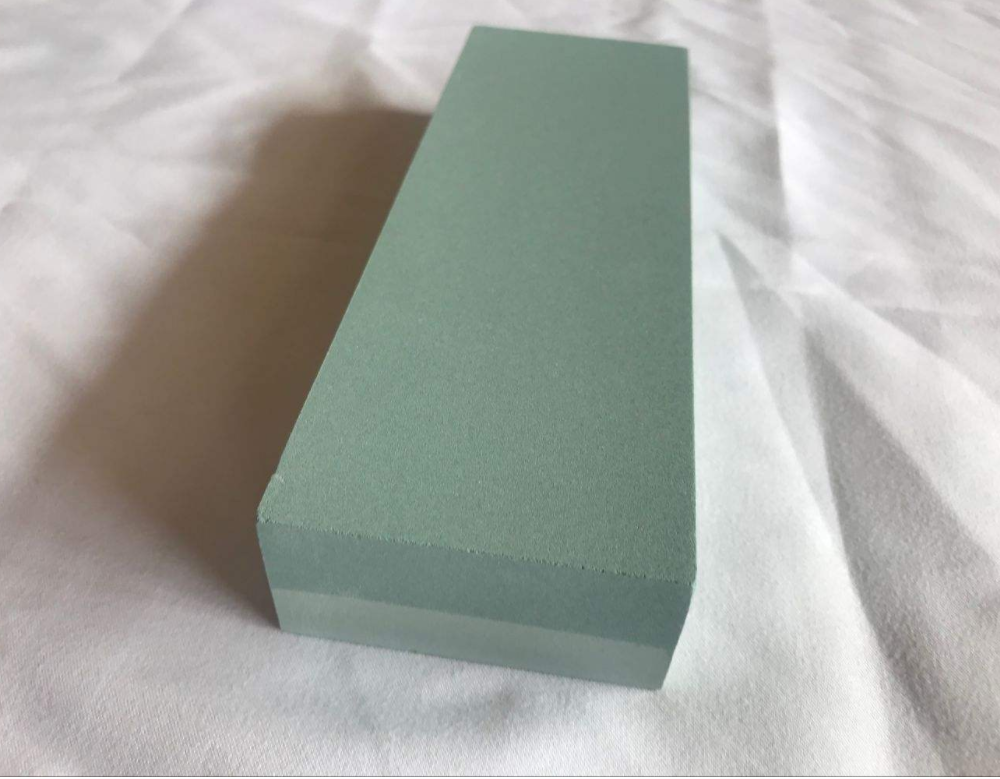
Silicon carbide is a preferred abrasive material for manufacturing superfinishing stones due to its exceptional hardness, sharp cutting edges, and excellent self-sharpening characteristics. It is widely used in precision finishing operations to achieve ultra-smooth surfaces, tight dimensional tolerances, and improved geometric accuracy on components such as bearings, crankshafts, camshafts, gears, hydraulic parts, and precision shafts. Green silicon carbide is particularly suitable for finishing hard and brittle materials, including cemented carbide, ceramics, and hardened steels, while black silicon carbide is commonly used for cast iron and non-ferrous alloys. The consistent cutting action of silicon carbide superfinishing stones helps reduce surface roughness, minimize friction, and extend the service life of mechanical components.
Silicon carbide for superfinishing stones is available in a wide range of FEPA grit sizes and micro powders to meet various finishing requirements. Coarser grits such as F120–F220 are suitable for rapid stock removal and pre-finishing operations. Medium grades F240–F400 provide an excellent balance between material removal and surface quality, making them ideal for general superfinishing applications. Fine grits F500–F800 are widely used for precision finishing, while F1000–F1200 and precision micro powders are selected for ultra-fine surface finishing requiring mirror-like finishes and extremely low surface roughness. Manufactured with high purity, controlled particle size distribution, and excellent friability, silicon carbide ensures stable cutting performance, efficient self-dressing behavior, reduced heat generation, and consistent finishing quality. It is compatible with vitrified, resin-bonded, and other bonded superfinishing stones used in automotive, aerospace, bearing, hydraulic, and precision engineering industries.
Silicon carbide provides excellent hardness, sharp cutting edges, and superior self-sharpening properties, allowing superfinishing stones to maintain high cutting efficiency while producing smooth, defect-free surfaces. It also generates less heat during machining, helping to improve dimensional accuracy and extend tool life.
The appropriate grit size depends on the required surface finish. F120–F220 is commonly used for pre-finishing and moderate material removal, F240–F400 is suitable for general precision finishing, while F500–F800 is ideal for producing fine surface finishes. For ultra-precision applications, F1000–F1200 and precision micro powders are recommended to achieve very low surface roughness and mirror-like finishes.