Understanding Silicon Carbide and Its Applications
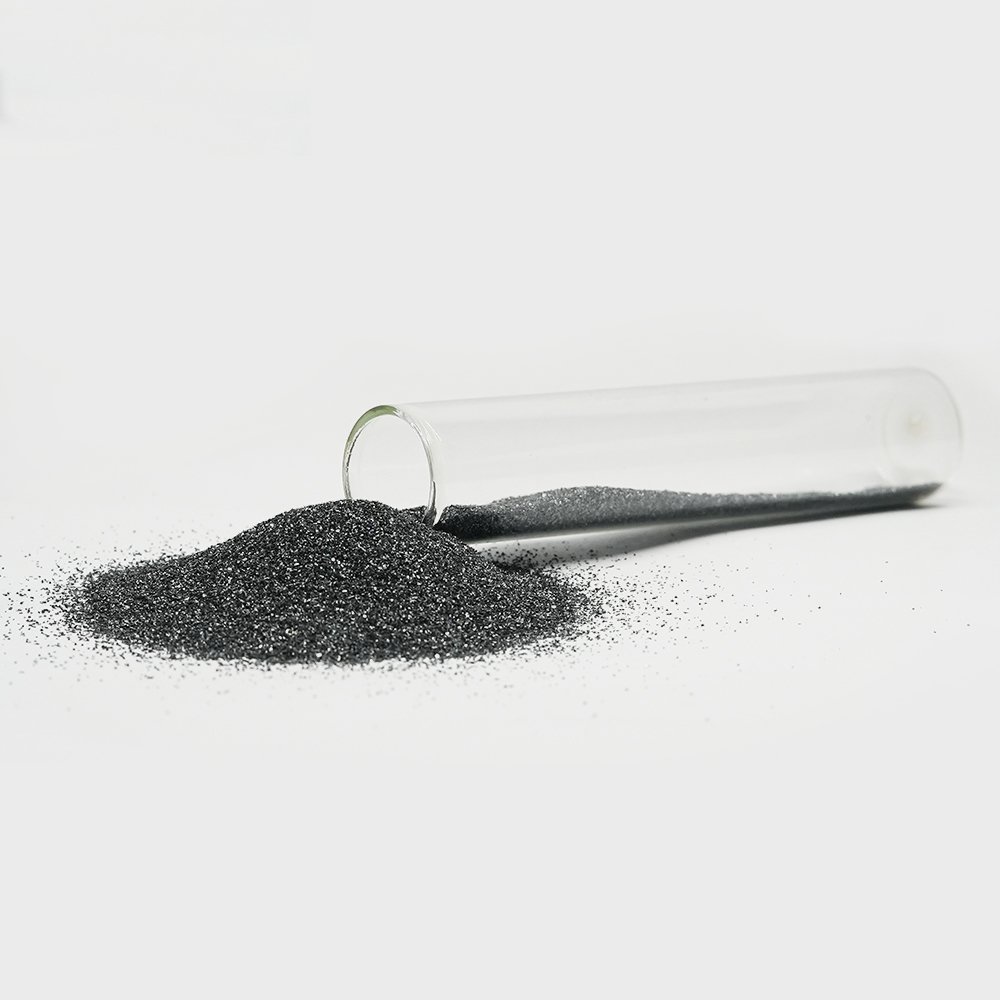
Introduction to Silicon Carbide
Silicon carbide (SiC) is an advanced compound made from silicon and carbon. Known for its exceptional hardness, high thermal conductivity, excellent wear resistance, and chemical stability, silicon carbide has become an important material used across many industries.
With a Mohs hardness of approximately 9–9.5, silicon carbide is widely recognized as a high-performance abrasive material. Its sharp cutting edges and strong mechanical properties make it suitable for grinding, polishing, sandblasting, surface treatment, refractory materials, ceramics, and semiconductor applications.
Due to its unique combination of strength and thermal performance, silicon carbide continues to play an important role in modern industrial manufacturing.
Types of Silicon Carbide
There are two main types of commercial silicon carbide:
- Green Silicon Carbide (Green SiC)
- Black Silicon Carbide (Black SiC)
Applications of Silicon Carbide
Silicon carbide serves a wide range of industries including abrasives, refractory materials, advanced ceramics, precision polishing, metal processing, and semiconductor manufacturing. In these fields, SiC’s properties provide outstanding performance benefits. For example, in semiconductor applications, SiC offers superior efficiency and higher thermal resistance compared to traditional silicon. Consequently, its role continues to expand as industries seek more advanced and reliable materials.
Green Silicon Carbide Applications
Green silicon carbide has higher purity and a more crystalline structure compared with black silicon carbide.
It provides excellent cutting performance and is mainly used for precision applications requiring high surface quality.
Common applications include:
- Precision grinding
- Optical glass polishing
- Ceramic processing
- Semiconductor wafer processing
- Fine abrasive powder production
Typical grit sizes include:
- F240
- F320
- F400
- F600
- F800
- F1000
- #1500
- #2000
Green SiC powder is especially suitable for applications requiring high purity and consistent particle size.
Black Silicon Carbide Applications
Black silicon carbide provides excellent toughness, impact resistance, and abrasive performance.
It is commonly used in heavy-duty industrial applications such as:
- Grinding wheels
- Cutting tools
- Sandblasting media
- Stone processing
- Metal surface preparation
- Refractory materials
Common grit sizes include:
- F16
- F24
- F36
- F46
- F60
- F80
- F100
- F120
Coarser silicon carbide grit sizes are used for faster material removal, while finer sizes provide smoother surface finishing.
What Is Silicon Carbide Used For?
Silicon carbide is used in a wide range of industries because of its hardness, thermal stability, and wear resistance.
The major silicon carbide applications include:
Silicon Carbide Applications in Abrasives
The largest application of silicon carbide is as an abrasive material.
Because of its sharp edges and high cutting ability, SiC abrasives are widely used for:
- Grinding wheels
- Abrasive belts
- Sandpaper
- Cutting discs
- Lapping powders
- Blasting abrasives
Different grit sizes are selected according to processing requirements:
Coarse Grit
Examples:
- F16
- F24
- F36
Used for:
- Heavy grinding
- Material removal
- Surface preparation
Medium Grit
Examples:
- F46
- F60
- F80
- F120
Used for:
- General grinding
- Metal finishing
- Tool processing
Fine Grit
Examples:
- F320
- F400
- F600
- F800
- #2000
Used for:
- Precision polishing
- Surface finishing
- Optical processing
Silicon Carbide Applications in Polishing
Green silicon carbide is widely used for precision polishing because of its high purity and uniform particle size.
It is suitable for polishing:
- Optical glass
- Ceramic components
- Sapphire materials
- Semiconductor parts
- Precision mechanical components
Fine silicon carbide powder helps achieve:
- Smooth surface finish
- High processing accuracy
- Reduced surface defects
Silicon Carbide Applications in Refractory Materials
Silicon carbide has excellent high-temperature resistance and thermal shock resistance.
Therefore, it is widely used in refractory industries.
Applications include:
- Furnace linings
- Kiln furniture
- Heat exchangers
- High-temperature components
- Wear-resistant parts
Common particle sizes:
- 0-1 mm
- 1-3 mm
- 3-5 mm
- 5-8 mm
Silicon Carbide Applications in Ceramics
Advanced ceramics use silicon carbide because of its:
- High strength
- Low thermal expansion
- Wear resistance
- Chemical stability
Applications include:
- Ceramic seals
- Mechanical components
- Heat-resistant parts
- Structural ceramics
Silicon Carbide Applications in Semiconductor Industry
Silicon carbide has become an important semiconductor material for next-generation electronics.
Compared with traditional silicon materials, SiC provides:
- Higher temperature resistance
- Higher voltage capability
- Lower energy loss
- Better efficiency
Applications include:
- Electric vehicle power systems
- Charging equipment
- Renewable energy systems
- Power electronic devices
How to Choose the Right Silicon Carbide Grit Size?
Selecting the correct silicon carbide grit depends on the application requirements.
| Application | Recommended Grit |
|---|---|
| Heavy grinding | F16-F36 |
| General grinding | F46-F120 |
| Surface finishing | F150-F320 |
| Precision polishing | F400-F1200 |
| Ultra-fine polishing | #1500-#4000 |
| Refractory materials | 0-8 mm |
Coarse grit provides faster cutting performance, while fine grit produces smoother surface finishes.
Conclusion
Silicon carbide is a versatile industrial material with applications ranging from abrasive manufacturing to advanced semiconductor technology.
Whether used for grinding, polishing, blasting, ceramics, refractory materials, or electronic components, silicon carbide provides excellent performance due to its hardness, thermal stability, and wear resistance.
Understanding the differences between Green Silicon Carbide and Black Silicon Carbide, as well as selecting the correct grit size, helps manufacturers achieve better processing efficiency and product quality.