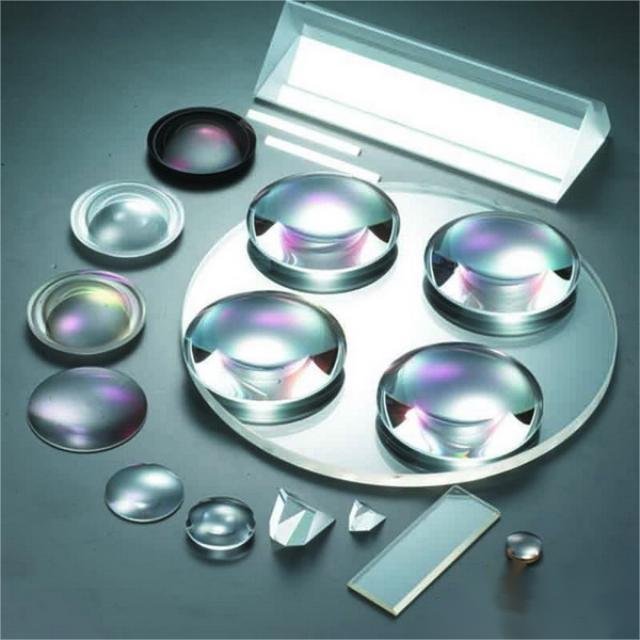
Silicon carbide is widely used in the precision processing of optical glass due to its exceptional hardness, sharp cutting edges, and excellent dimensional stability. It serves as an ideal abrasive for grinding, lapping, edge finishing, and surface preparation of optical components such as lenses, prisms, mirrors, filters, and display glass. Green silicon carbide is particularly favored in optical manufacturing because of its high purity and uniform crystal structure, enabling efficient material removal while maintaining excellent surface integrity. Its superior cutting performance helps reduce subsurface damage, improve dimensional accuracy, and prepare optical surfaces for subsequent polishing processes.
For optical glass applications, green silicon carbide is commonly supplied in both macro grits and precision micro powders to satisfy different stages of processing. FEPA macro grits ranging from F220 to F1200 are widely used for precision grinding and edge finishing, while micro powders ranging from JIS #800 to #8000 or customized particle sizes are preferred for fine lapping and intermediate polishing of optical components. Fine particle size distribution, high purity, and minimal oversized particles ensure consistent cutting action and excellent surface uniformity. Silicon carbide also exhibits excellent thermal conductivity and chemical stability, reducing heat accumulation during machining and minimizing the risk of surface defects such as scratches and edge chipping. These characteristics make it an ideal abrasive material for manufacturing camera lenses, optical prisms, telescope mirrors, laser optics, photovoltaic glass, and precision optical instruments.
Green silicon carbide offers higher purity, sharper crystal edges, and more uniform particle morphology than black silicon carbide. These characteristics provide more consistent cutting performance, lower subsurface damage, and improved surface quality, making it the preferred abrasive for precision optical glass manufacturing.
The appropriate grit size depends on the processing stage. F220–F400 is commonly used for rough precision grinding, F500–F800 is suitable for semi-finishing and fine grinding, while F1000–F1200 and JIS #1500–#8000 micro powders are widely used for precision lapping and pre-polishing before final polishing with cerium oxide or diamond slurry.
Silicon carbide provides faster cutting rates, excellent self-sharpening performance, and outstanding dimensional consistency. Its controlled particle size distribution helps produce uniform surface finishes while reducing scratches and edge chipping. In addition, its high thermal conductivity minimizes heat generation during processing, improving machining efficiency and extending the service life of grinding and lapping tools.