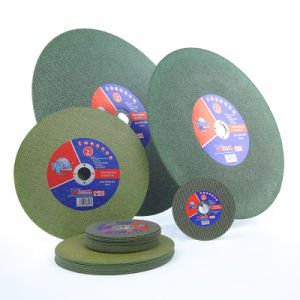
Silicon carbide is a premium abrasive material widely used in the production of bonded abrasives, including grinding wheels, mounted points, sharpening stones, and abrasive segments. Its exceptional hardness, sharp cutting edges, and high thermal conductivity enable fast material removal while minimizing heat generation during grinding. Black silicon carbide is commonly selected for grinding cast iron, non-ferrous metals, stone, and refractory materials, whereas green silicon carbide is preferred for hard and brittle materials such as cemented carbide, ceramics, glass, sapphire, and other advanced engineering materials. The excellent self-sharpening properties of silicon carbide ensure consistent cutting performance, extended tool life, and superior surface finish across a wide range of industrial grinding applications.
Silicon carbide for bonded abrasives is available in a comprehensive range of FEPA grit sizes, typically from F12 to F220 for abrasive grains and F230 to F1200 for precision micro grits. Coarse grades (F12–F36) are designed for heavy stock removal and rough grinding, while medium grades (F46–F80) provide an excellent balance between cutting efficiency and surface quality for general-purpose grinding wheels. Fine grades (F90–F220) are widely used for precision grinding, sharpening, and finishing operations, and micro grits (F230–F1200) are ideal for ultra-fine grinding of carbide tools, ceramics, optical glass, and semiconductor components. Manufactured with high purity, controlled particle size distribution, and excellent friability, silicon carbide delivers stable wheel performance, efficient self-dressing characteristics, and reliable grinding consistency, making it an ideal raw material for vitrified, resin-bonded, rubber-bonded, and magnesia-bonded abrasive products.
The choice depends on the workpiece material and grinding application. Black silicon carbide is generally used for grinding cast iron, non-ferrous metals, stone, and refractory materials due to its excellent cutting efficiency and cost-effectiveness. Green silicon carbide, with its higher purity and sharper crystal structure, is recommended for cemented carbide, ceramics, optical glass, sapphire, and other hard and brittle materials that require greater precision and superior surface finishes.
The appropriate grit size depends on the required grinding performance. Coarse grits such as F12–F36 are ideal for rapid stock removal and rough grinding. Medium grits F46–F80 are widely used for general-purpose grinding wheels, providing a balance between cutting speed and surface finish. Fine grits F90–F220 are suitable for precision grinding and sharpening, while micro grits F230–F1200 are commonly selected for polishing, fine finishing, and manufacturing high-precision bonded abrasive tools.
Silicon carbide combines high hardness, excellent thermal conductivity, sharp cutting edges, and outstanding self-sharpening properties, allowing grinding wheels to maintain consistent cutting performance while generating less heat. Its controlled particle size distribution and high purity also contribute to longer wheel life, improved grinding efficiency, and superior surface quality, making it one of the most reliable abrasive materials for vitrified, resin-bonded, rubber-bonded, and magnesia-bonded abrasive products.